Introducing Dewlight
We shipped our first product: Dewlight, a daily affirmations practice app for iOS.


Dewlight is live on the App Store. It is a daily affirmations practice app. An affirmation is a short sentence rooted in what you value. Practised daily, it gently reshapes how you talk to yourself, and over time, what you believe.
Dewlight is also step one of the master plan: build and ship simple and useful products. Near-zero cost to run and maintain. The smallest possible scale, deliberately, to prove the model works.
Where it came from
Some of the most driven people I know are tough on themselves. They are reflective, which serves them well, but the same reflection turns critical fast. I know the pattern: left unattended, my self-talk goes negative, and I don’t always catch it in time.
What keeps it in check, for me, is a daily affirmation practice. I’ll be honest: I used to file affirmations under woo-woo pseudoscience (somewhere between crystals and manifestation journals). Then I actually tried the practice. It gave me three things I value highly: clarity, confidence, and conviction.
If the word still makes you wince, start with what an affirmation actually is — the real thing is quieter, and far better evidenced, than the caricature. And it is not a fringe habit: Tobi Lütke, the founder of Shopify, practises daily affirmations too.
 David Senra
@davidsenra
David Senra
@davidsenra
The mind is a powerful place and what you feed it can affect you in a powerful way. Tobi Lutke @tobi on how you can literally change the way you think and act: “I was terrified of public speaking until I sat down for a week and every day I spent 10 minutes just writing that I…
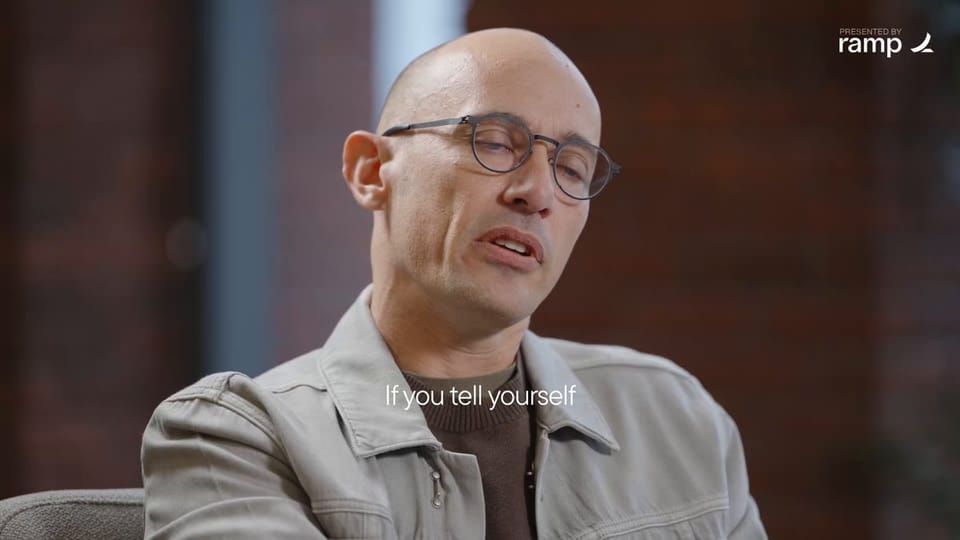 Watch the clip on X
Built to solve my own problem
For years my practice lived in Apple Notes: a list of sentences, scrolled through over breakfast. Workable, never quite right.
The apps in the daily affirmations category were worse. They want a subscription to show you a sentence a day. They guilt you with streaks. They dress the practice in cartoon sunsets and gradient quotes, or hand you a library of slogans nobody could say with a straight face.
So I built the tool I wanted instead. Three ways to practise: Mirror, where you hold the phone against a real mirror and the text flips so you read the words and meet your own gaze; Card, a single line to swipe and sit with; and Listen, the same words played back in your own recorded voice. Behind them, more than 1,000 affirmations across fourteen values, grounded in self-affirmation theory.
What I want to learn
Dewlight is also a deliberate exercise. I set out to learn four things:
- End-to-end iOS development, from first commit to App Store review.
- Social-media marketing, and in particular automated content generation that does not come across as AI slop.
- Consumer apps are hard; most die quietly. I want to learn to crack that puzzle.
- Personalisation algorithms: experimenting with how an app learns what resonates with you, for a future product 😉.
And there is a thesis to prove. Liminary exists on the claim that a small team with modern tools can ship software that is useful, beautiful, and costs almost nothing to run and maintain. Dewlight is the first piece of evidence.
Try it
Dewlight is on the App Store for £2.99. There’s no subscription, no account, and no data collection. You buy it once and it is simply yours (remember when software worked like that?).
If you’d like to watch it grow (see learning objective number two), follow @dewlight.app on Instagram.
The bottom line: a daily affirmation practice quietly works, the apps for it didn’t, so I built the one I wanted — and proved Liminary’s thesis in the process.